


China’s Strategic and Operational Concepts: An Israeli Perspective
1/1/24
Dr. Sarah-Masha Fainberg
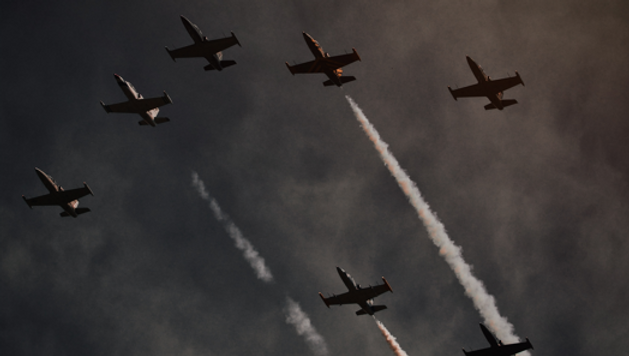
Over the past two decades, China has been engaged in a global military buildup, expanding its military presence beyond its borders, particularly in the Pacific Ocean, the Indian Ocean, the Arctic region, and across Africa, and to a lesser extent in the Middle East. In this context, China is building advanced military capabilities designed to enable power projection, both in its regional arena and globally: a navy with long-range capabilities, long-range aircraft, space and cyber capabilities, and sophisticated information warfare capabilities.
Within Western academic literature, there are two leading and opposing approaches to analyzing the strategy behind China's military buildup: on the one hand, a moderate approach suggesting that China is primarily interested in safeguarding its economic and commercial interests worldwide and seeks to advance them peacefully; and on the other hand, a suspicious approach arguing that Beijing strives to achieve military dominance in order to undermine US hegemony. Whether China advocates a moderate, peace-seeking strategy or an aggressive one, at the operational level, its military activism has thus far been characterized by assertiveness combined with profound caution against escalation, particularly in the South China Sea and along the border with India.
China's strategic and operational concepts, as well as its approach to the use of force, differ from those accepted in the West. Since the Mao era, China's leading strategic approach, "Active Defense," closely integrates defensive, offensive, and deterrent elements. The concept of Active Defense reflects China's strategic ambiguity, which declaratively highlights its defensive intentions but operationally adopts an offensive posture relying on an accelerated and comprehensive force design process.
Concurrently, China has formulated a comprehensive warfare concept known as the "Three Warfares" (information warfare, psychological warfare, and legal warfare, or "lawfare"), which includes maneuvers that "envelope" military operations with preliminary, accompanying, and subsequent efforts. Within this framework, China operates according to an operational logic of irregular warfare, which acknowledges its military inferiority relative to the US and seeks to exploit the adversary's vulnerabilities by achieving superiority in various domains. Irregular warfare places a central emphasis on achieving superiority in the information domain (artificial intelligence, cyber, quantum computing, ICT, electronic warfare, space, sea, and air), which is considered a decisive component of the modern battlefield.
The "Three Warfares" concept corresponds with the Chinese policy of blurring the lines between the military and civilian domains: between wartime and peacetime, between the military and civilian sectors in force design (MCF – Military-Civil Fusion), and between the overt use of military force and the use of irregular military force disguised as a civilian entity, intended to deter or influence the enemy.
To actualize these warfare approaches, China has developed several leading operational concepts. Prominent among them are "Intelligentized Warfare" (the accepted English translation of the original Mandarin term), which strives to neutralize the enemy and even dismantle it as a system by achieving superiority in the information and technology domains, and the Chinese Anti-Access/Area Denial (A2/AD) concept, whose purpose is to complicate the ability of the US to militarily intervene in regions adjacent to China.
Chinese involvement in the Middle East and North Africa (MENA) is currently focused on economics, diplomacy, and soft power. However, the development of strategic approaches and operational concepts for global power projection, alongside the buildup of dedicated capabilities, may prompt China to expand its military presence in the region and its supply of weaponry to it—two aspects that could directly or indirectly affect the Israeli Air Force's operational space.